Understanding What Can Destabilize Research Peptides
Research peptides are delicate molecules that require careful handling from the moment they are synthesized until they are used in an experiment. The stability of a peptide is affected by several environmental factors, and even small deviations in storage or handling can lead to degradation, loss of activity, or contamination. The direct answer is that the main threats to peptide stability are temperature fluctuations, moisture, light exposure, microbial contamination, and improper reconstitution techniques. Each factor works through a different mechanism, and understanding these can help researchers avoid costly mistakes.
Temperature: The Primary Enemy of Peptide Stability
Peptides are thermodynamically unstable. When stored at room temperature, molecular motion increases, which accelerates chemical reactions that break peptide bonds or cause side-chain modifications. The most common degradation pathways are deamidation, oxidation, and hydrolysis. Deamidation occurs when the amide side chains of asparagine or glutamine residues are converted to acidic forms, altering the peptide's charge and structure. Oxidation typically affects methionine, cysteine, and tryptophan residues, leading to loss of biological function. Hydrolysis, the breaking of peptide bonds by water, is also accelerated at higher temperatures.
The standard recommendation is to store lyophilized (freeze-dried) peptides at or below -20 degrees Celsius. For long-term storage, -80 degrees Celsius is often preferred. However, repeated freeze-thaw cycles can cause mechanical stress and condensation, which introduces moisture. The best practice is to aliquot the peptide into single-use portions so that each thaw is for one experiment only. A cold chain that maintains the peptide at the required temperature from the supplier to the laboratory is critical. For example, when ordering from a supplier like Shanghai Synthetic Peptides Bio, researchers should verify that the shipment includes adequate ice packs or dry ice and that the package is delivered quickly to avoid extended time at ambient temperature.
Moisture: The Silent Degrader
Even small amounts of moisture can cause significant damage to a peptide. Lyophilized peptides are hygroscopic, meaning they readily absorb water from the air. Once moisture is present, hydrolysis of peptide bonds can occur, and the peptide may also become a medium for microbial growth. The first sign of moisture damage is often clumping or caking of the powder, which may also indicate that the peptide has partially dissolved and then re-dried into an amorphous solid. This change in physical form can affect solubility and the accuracy of reconstitution.

To protect against moisture, peptides should be stored in tightly sealed vials with a desiccant. The desiccant, typically silica gel or molecular sieves, absorbs any water vapor that enters the container. It is important to allow the vial to warm to room temperature before opening it, because cold air from a freezer can condense moisture on the peptide surface. Once opened, the vial should be used quickly and then re-sealed with fresh desiccant. If a peptide must be stored after reconstitution, it is usually best to store it in a sterile buffer at low pH (around 2-3) in a freezer, but this is always a temporary measure.
Light Sensitivity: Not All Peptides Are Equal
Some peptides contain chromophores that absorb light, particularly ultraviolet and visible wavelengths. Tryptophan, tyrosine, and phenylalanine residues are especially sensitive to photo-oxidation. When these residues absorb light energy, they can form reactive oxygen species that damage the peptide itself or nearby molecules. This can lead to cross-linking, aggregation, or loss of activity. Even peptides without these residues can be affected if they contain disulfide bonds or metal ions that catalyze photochemical reactions.
The simple solution is to store peptides in amber or opaque vials, or to wrap clear vials in aluminum foil. When handling the peptide, minimize exposure to direct sunlight, fluorescent lights, or UV light sources. Many researchers keep their peptide stocks in a dark freezer or a light-proof box. It is also wise to avoid placing the vial near windows or under direct light in the laboratory.
Microbial Contamination: A Risk at Every Step
Peptides are excellent nutrients for bacteria and fungi. Even trace contamination can lead to degradation of the peptide by microbial enzymes, or to the release of endotoxins that interfere with biological assays. The risk is highest during reconstitution, when the peptide is dissolved in a buffer or water. If the water is not sterile, or if the vial's septum is not properly cleaned, microbes can enter the solution and multiply.
To avoid this, use only sterile water or buffer for reconstitution, and work in a clean environment, ideally a biosafety cabinet or a laminar flow hood. The vial's septum should be wiped with an alcohol swab before puncturing it with a needle. If the peptide is to be stored after reconstitution, it should be filtered through a 0.22-micron sterile filter, or stored in a sterile vial under aseptic conditions. Many researchers add a small amount of a bacteriostatic agent, such as sodium azide or thimerosal, but this may interfere with some assays and should be tested beforehand.
Reconstitution: The Critical Moment
Reconstitution is the step where most handling errors occur. The choice of solvent is crucial. Many peptides are best dissolved in a small amount of a volatile organic solvent, such as acetonitrile or dimethyl sulfoxide, before being diluted in an aqueous buffer. However, some peptides are insoluble in water or form gels at high concentration. The solubility depends on the amino acid sequence, the pH, and the ionic strength of the buffer.
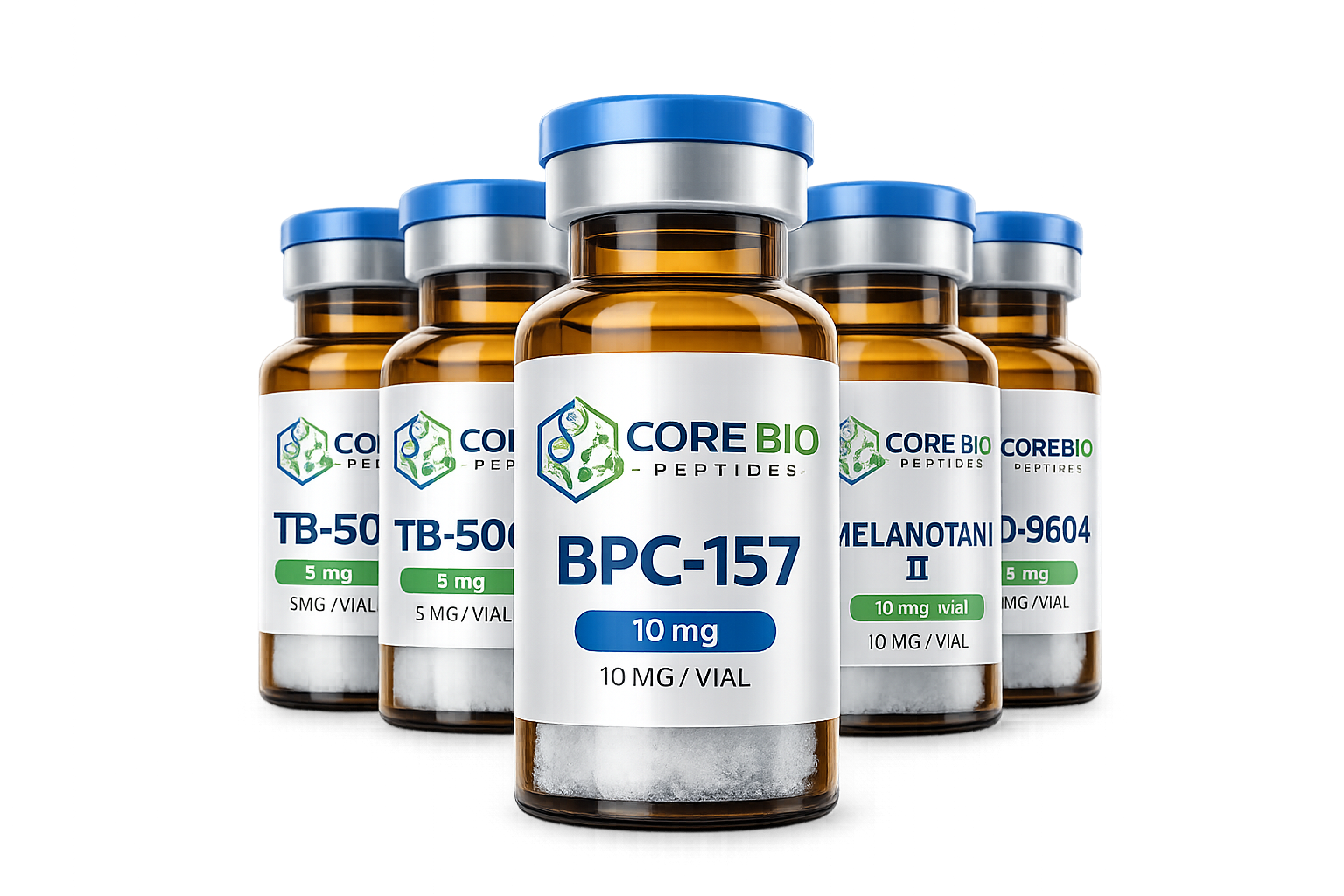
General guidelines include starting with a small volume of solvent, vortexing gently, and then adding the buffer slowly while mixing. Avoid vigorous shaking, which can cause foam formation and denaturation. If the peptide does not dissolve, it may be necessary to adjust the pH or to add a small amount of a solubilizing agent like acetic acid or ammonium hydroxide. Once dissolved, the peptide should be used as soon as possible, because the solution is now more susceptible to hydrolysis and microbial growth.
For long-term storage of reconstituted peptides, they are often lyophilized again or stored as a frozen solution in small aliquots. Each freeze-thaw cycle should be minimized. It is also important to record the exact concentration after reconstitution, because the peptide may not dissolve completely, leading to a lower actual concentration than expected.
Chemical Incompatibilities
Peptides can react with the container they are stored in. Glass vials are generally inert, but some peptides may adsorb to the glass surface, reducing the available concentration. Silanized (silicone-coated) vials can reduce this adsorption. Plastic containers, especially those made of polypropylene, can leach plasticizers or other chemicals that interfere with the peptide or the assay. For critical applications, use only vials that are certified for peptide storage, such as those made of borosilicate glass with a PTFE-lined cap.
Another concern is the presence of metal ions in the buffer. Certain metals, like copper or iron, can catalyze oxidation of the peptide. Using a chelating agent, such as EDTA, in the buffer can help mitigate this. The buffer itself should be chosen to avoid reactions with the peptide, such as the Maillard reaction between primary amines and reducing sugars, or the formation of diketopiperazine at alkaline pH.
Practical Storage Recommendations
To summarize the key points for maintaining peptide stability:
- Store lyophilized peptides at -20 degrees Celsius or lower, in a sealed vial with desiccant.
- Allow the vial to warm to room temperature before opening to prevent condensation.
- Protect the peptide from light by using amber vials or wrapping in foil.
- Use sterile technique during reconstitution, and filter the solution if necessary.
- Aliquot the peptide into single-use portions to avoid freeze-thaw cycles.
These steps are simple but easy to overlook. A single mistake, like leaving the vial on the bench for an extra hour, can compromise weeks of work. The best approach is to treat each peptide as unique and to test its stability under the specific conditions of your experiment. For example, if the peptide contains multiple methionine residues, it may be more sensitive to oxidation, and you might add a reducing agent like beta-mercaptoethanol to the buffer. If the peptide is a cyclic peptide, it may be more resistant to proteolysis but still sensitive to pH changes.
When ordering high-purity research peptides, it is wise to choose a supplier that provides detailed documentation on the peptide's purity, molecular weight, and recommended storage conditions. A reputable supplier like Shanghai Synthetic Peptides Bio typically includes a certificate of analysis with each batch, which can help you verify the quality before you begin your work. By following these guidelines, researchers can minimize the risk of peptide degradation and ensure that their experiments are reproducible and reliable.
Ultimately, the stability of a research peptide is a matter of consistent, careful handling from start to finish. The small investments in proper storage and reconstitution pay off by saving time, materials, and the frustration of failed experiments. Whether you are working with a simple linear peptide or a complex cyclic structure, the same principles apply: keep it cold, dry, dark, and sterile.